
Ending an online dating conversation politely takes one short, final note when the other person has treated you respectfully. State that you will not be continuing, then stop engaging; a chat that led to plans for Saturday ends with a prompt cancellation once you know you do not want to meet. It is awkward. Leaving a door half-open is usually worse.
Published by Dating Online
When interest fades before a first date

Interest fades for ordinary reasons: the conversation feels flat, relationship intentions differ, or something said leaves you uneasy. You do not need a dramatic offense to close an online dating conversation. Continuing out of obligation turns a small discomfort into more messages, more anticipation, and a harder exit.
A planned first date deserves prompt cancellation once you know you will not go. The same applies when someone repeatedly pushes for private details, ignores a stated limit, or creates a tone you do not want in your life. You have enough information when you know you do not want further contact. Waiting for a better reason usually only delays a necessary answer.
A brief, direct message is usually enough
A brief note has one inconvenience: it can feel blunt when you would prefer to spare someone disappointment. Its advantage is that the recipient understands what has changed and does not have to decode silence, delayed replies, or vague talk about being busy.
For a respectful match, acknowledge the interaction if that feels sincere, state that you do not want to continue dating or meeting, and leave out a question. The message does not need a verdict on their personality, appearance, career, or texting style. Those details rarely help and often turn a closing note into an argument.
Avoid language that suggests a future you do not intend to offer. A promise to reconnect later, an apology that sounds undecided, or a soft invitation to keep chatting changes a final message into a negotiation.
Mixed signals often come from overexplaining
Lengthy explanations often create their own problem. Once you list several reasons for ending contact, the other person has material to challenge each one: they can promise to change, explain away a remark, or ask for another chance. A short conclusion does not invite that kind of back-and-forth.
An invented work emergency or family obligation causes a different mess. It leaves the connection technically open and forces you to maintain a story if they check in later. Honest brevity is kinder than a detailed excuse you have to carry around.
Apologies also become confusing when they sound like uncertainty. Regret for cancelling late is appropriate; regret that implies you are still weighing the match is not. Friendship offers deserve the same honesty. Do not offer friendship to cushion the refusal when you do not want future contact. That is not softness. It is a second, less direct rejection waiting to happen.
Pressure or hostility changes the appropriate response
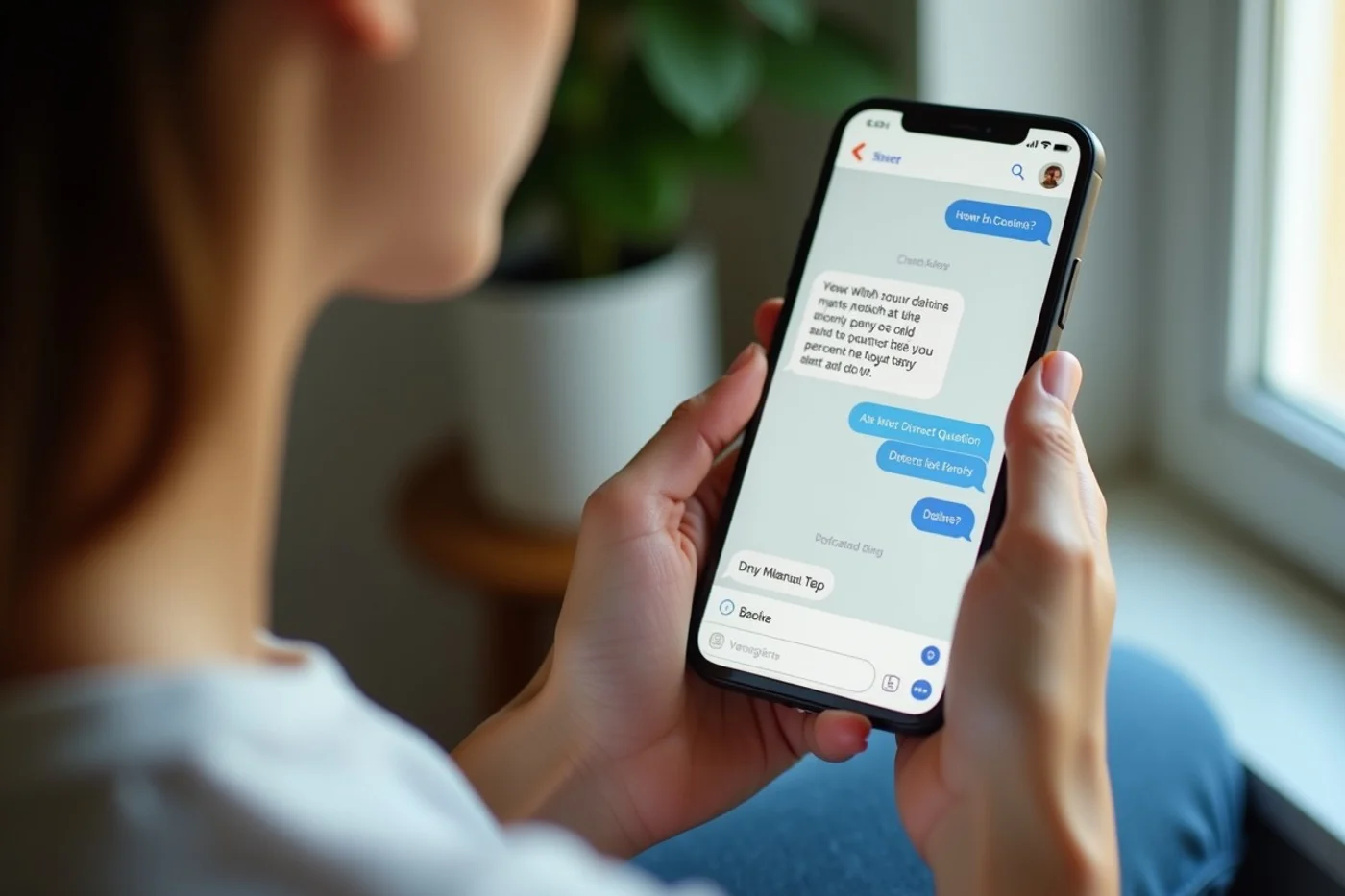
Disappointment is not the same as pressure. A respectful person may feel hurt, send a final response, and leave. Repeated requests for another chance, guilt about your decision, insults, sexual comments after refusal, or attempts to shame you for ending contact cross into conduct that does not merit further explanation.
No reply is appropriate when a response would feed that conduct. Save screenshots of messages, profile details, and dates before unmatching or blocking if you may need them later. Then use the platform's unmatch or block function where those controls are available. Courtesy does not require staying reachable for someone who treats a refusal as an opening to push harder.
Send one clear closing message
- An early chat needs very little detail. A scheduled date or a meeting that already happened warrants a direct acknowledgement of the plan or time shared.
- Include your decision not to continue and remove future promises, open questions, criticism, and explanations you do not want to debate.
- One complete closing note is enough. An unanswered note needs no second message to confirm that it was received.
- A recipient who argues has already received the answer. Do not defend the decision; disengage and unmatch or block if the exchange continues.
Closing-message examples by context
An early-chat closing note is the leanest version: it briefly recognizes the exchange and says that you do not see it moving forward. A first-date decline follows the same structure, with a direct reference to not wanting to meet. In a two-choice situation, an early chat needs no further explanation; a Saturday meeting needs a prompt cancellation because the other person has reserved time.
A cancelled date calls for a message as soon as you have decided, not a slow fade through the day. Keep the reason broad if you include one. After one date, acknowledge the time spent and state that you are not interested in another date. There is no need to catalogue missing chemistry, awkward moments, or personal traits. The point is to close contact, not to conduct a performance review.
Each version shares the same backbone: a final decision, no hidden invitation, and no personal attack. Adjust the amount of acknowledgement to the actual contact you had, then let the conversation end.
Courtesy and self-protection can require different exits
Courtesy fits a respectful match who has done nothing wrong and deserves to know that plans or conversation have ended. A brief explanation in that setting is a social courtesy, not an obligation to defend every preference.
Coercion, insults, repeated messages after refusal, and attempts to manipulate you call for a different exit. Silence, an unmatch, or a block ends access without offering new material for pressure. An explanation is not an entry ticket to continued contact.
A closing message works when its meaning survives a quick reread: no future plan, no false excuse, and no question that invites a case for continuing. Send that once when the interaction has been respectful. When someone turns refusal into pressure, the criterion shifts from politeness to ending access.